
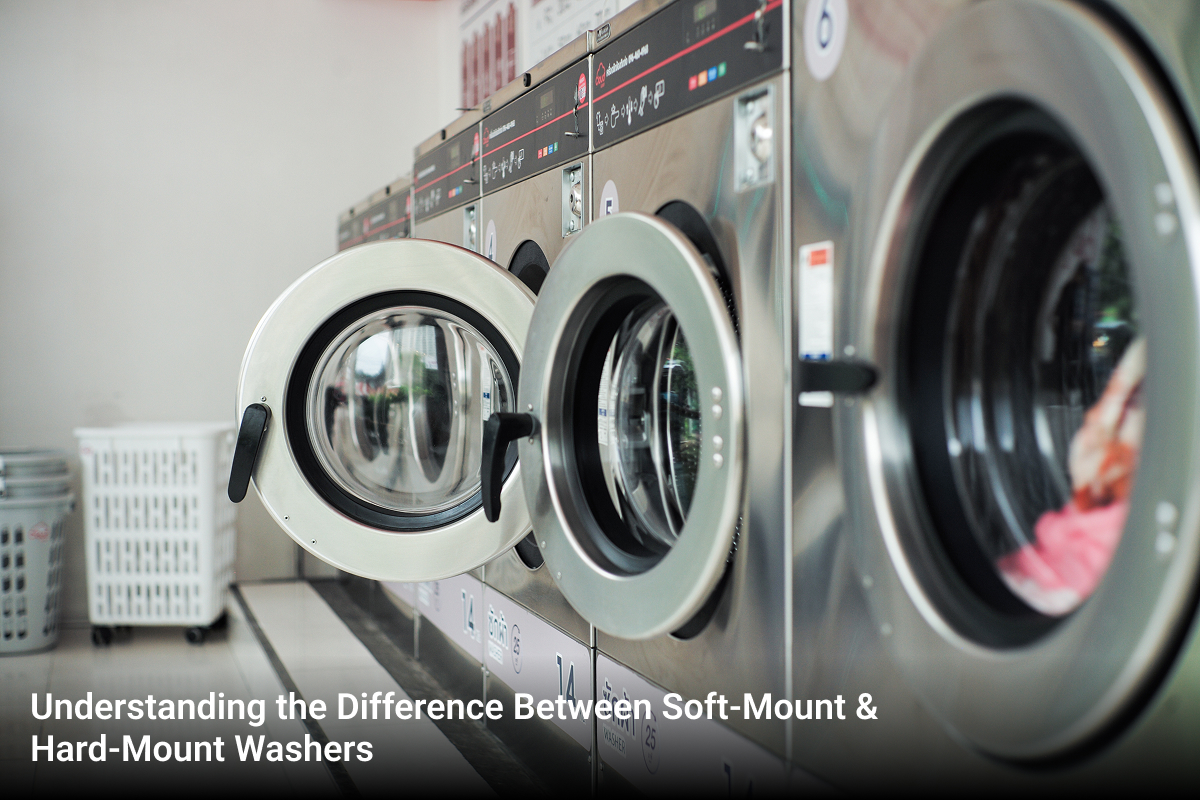
Understanding the Difference Between Soft-Mount & Hard-Mount Washers
If you’re upgrading or expanding a facility’s laundry operations, one of the first and most important decisions you’ll face is choosing between a soft-mount washer and a hard-mount washer. At Coronet Equipment, we know that selecting the right commercial washer affects installation, space requirements, operating costs, and long-term efficiency. Here’s a breakdown of what sets soft-mount and hard-mount washers apart, and how to decide which fits your facility’s needs.
What Are Soft-Mount vs. Hard-Mount Washers?
Hard-mount washers, also known sometimes as rigid-mount washers, are built with a solid frame and are designed to be bolted directly to a concrete floor or reinforced slab. This ensures that the high-speed spin cycles and strong centrifugal forces generated during operation are safely anchored. Because they lack internal shock absorbers or suspension, the stability of the floor is essential for safe and reliable operation.
In contrast, soft-mount washers include an internal suspension system like springs and shock-absorbing components isolate the drum from the outer frame. This design dramatically reduces the transmission of vibration and structural stress to the building’s floor. As a result, soft-mount washers can be installed on a wider variety of floors including upper floors or floors without heavy reinforced foundations wherever structural support and vibration isolation are important.
Key Differences and What They Mean for Your Operation
Because hard-mount washers can require secure bolting to a concrete slab, they often demand more from your building structure. That limits where they can be installed typically on ground floors or in spaces with reinforced concrete capable of handling heavy vibrations.
Soft-mount washers, by contrast, offer more flexibility. Their built-in suspension means you can install them on various floor types, including upper levels or retrofit spaces where installing a slab is impractical. That flexibility can make facility planning and renovation far simpler.
Efficiency, Throughput, and Operating Costs
One of the advantages of soft-mount washers is their ability to spin at higher G-forces (i.e., higher extract speeds). This removes more water from laundry during the spin cycle, meaning loads come out drier. As a result, drying times shorten, which saves energy and increases throughput. This can be useful for high-volume commercial laundries or facilities aiming for efficient cycles.
Hard-mount washers typically spin at lower extraction speeds, so clothes may retain more moisture after washing, leading to longer drying times. However, hard-mount units often have a simpler mechanical design and lower upfront cost than soft-mount machines, which may make them more attractive if budget is a primary concern and structural requirements are met.
Maintenance and Longevity Considerations
Hard-mount washers tend to be mechanically simpler, as they lack the suspension components of soft-mount machines. This generally means that there are fewer moving parts that might wear out or require servicing.
Soft-mount washers, while offering advanced vibration isolation and efficiency, have more internal components (springs, dampers, suspension systems), which can increase maintenance needs over time. That said, many soft-mount machines are built for heavy-duty commercial use and can provide reliable service when properly maintained.
How Coronet Equipment Frames the Decision
At Coronet Equipment, we stress that the best washer choice depends on your facility’s structure, laundry volume, and long-term operational needs. Whether you need robust, stable performance on a reinforced concrete floor, or flexible installation with minimized vibration and noise, understanding the trade-offs between soft-mount and hard-mount washers is key. We help clients navigate these decisions by offering unique options for industries to match different building types, usage requirements, and maintenance preferences.
Decision Checklist: Which Washer Type Matches Your Needs
- Do you have a reinforced concrete slab floor or ground-level space? A Hard-mount washer may be suitable.
- Do you need to install washers on upper floors, wooden floors, or buildings without reinforced foundations? A Soft-mount washer could likely be better.
- Is vibration, noise, or structural stress an issue for your facility? A Soft-mount washer can help reduce impact.
- Are you prioritizing initial capital cost over installation complexity or long-term efficiency? A Hard-mount may offer cost savings upfront.
- Do you care about drying efficiency, high throughput, and lower utility costs over time? A Soft-mount’s high-spin extraction could improve efficiency.
Make a Choice With Confidence
Choosing between soft-mount and hard-mount washers isn’t simply a matter of preference: It is a strategic decision that affects installation, long-term performance, maintenance, and operational costs. By carefully assessing your building’s structure, usage volume, and goals, you can select the washer type that best supports your facility’s laundry needs. Contact us today and let us help you make the choice with confidence guiding you toward the right commercial washer solution for your operations.
Recent Posts

When to Repair vs. Replace Your Commercial Washer
For businesses that depend on reliable laundry operations, from hotels and healthcare facilities to laundromats and multi-unit housing, deciding whether to repair or replace your commercial washer is a critical choice. The decision affects not [...]
Top Reasons to Upgrade to a High-Performance Commercial Dryer
For businesses that rely on laundry, whether laundromats, hospitality, healthcare facilities, multi-housing complexes, or on-premise laundry operations, choosing the right commercial laundry equipment is essential. While many companies focus on washers first, upgrading your commercial [...]

How to Know When Your Commercial Washer Needs New Parts
A dependable commercial washer is essential for any high-volume laundry operation. Over time, however, even the most durable machines experience wear on critical components. The good news is that washers usually show early warning signs [...]