
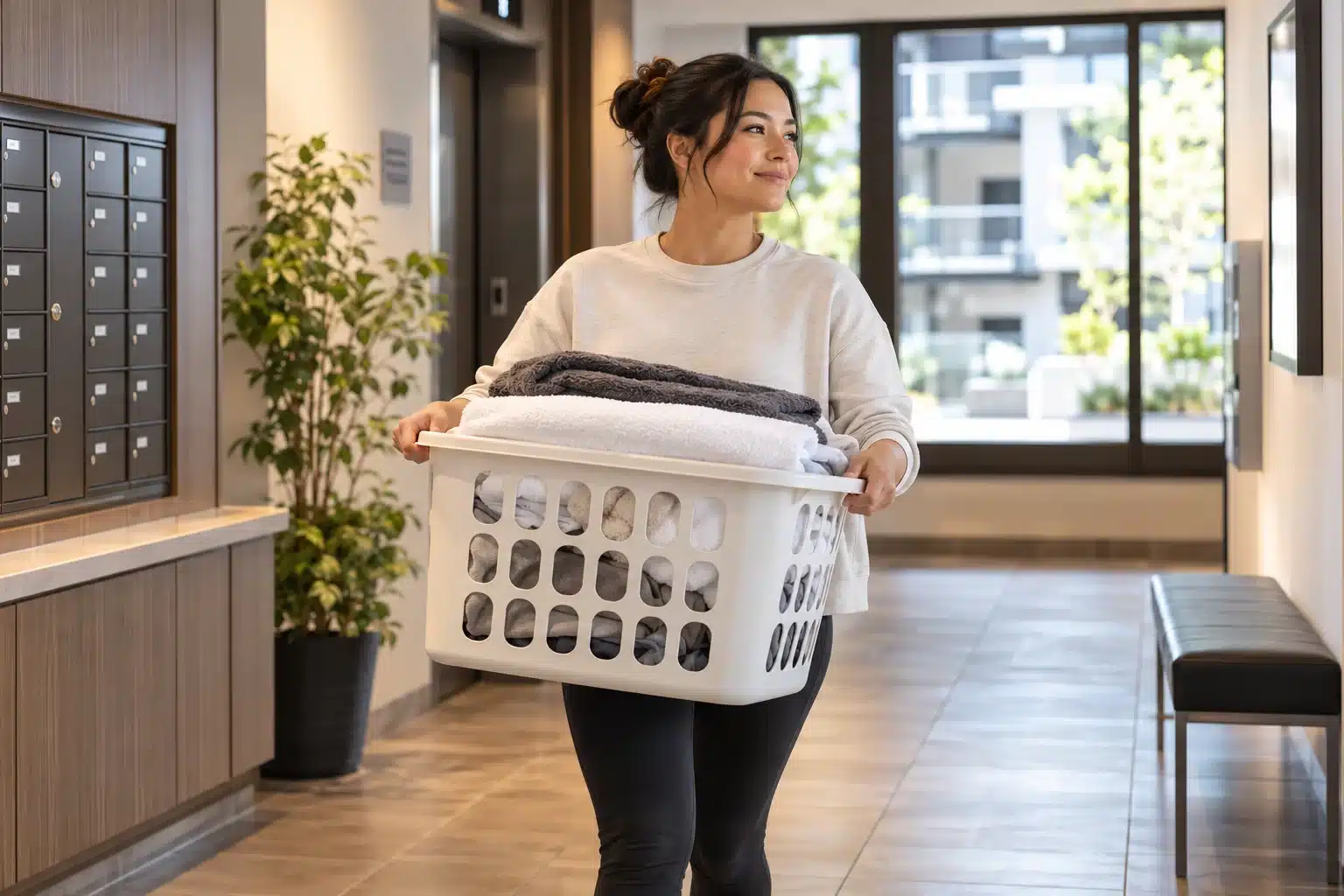
Multi-Housing Laundry Equipment: Vended vs. Owner-Operated Options for Apartment Properties
Multi-housing laundry equipment includes the commercial washers, dryers, and payment systems that serve shared laundry rooms in apartment buildings, condominiums, and other multi-unit properties. The right choice starts with one decision: will the room be vended or owner-operated? From there, reliability, tenant satisfaction, and cost recovery shape which equipment makes sense.
Why the Shared Laundry Room Matters
For many tenants, the laundry room is used every week. When it works, nobody thinks about it. When a washer is out of order or a dryer leaves clothes damp, the property manager hears about it.
A shared laundry room also asks a lot of its equipment. Machines run many cycles a day, and different tenants load them in different ways. That is why shared laundry systems for apartments are built around commercial washers and dryers rather than household models.
Vended vs. Owner-Operated: What Is the Difference?
The main difference is who pays for each cycle and who carries the cost of the room.
Vended Laundry Equipment
With vended laundry equipment, tenants pay for each cycle, usually through a coin or card system. The money collected helps cover what the room costs to run.
Vended rooms often suit:
- Buildings where tenants do not have in-suite laundry.
- Properties that want the laundry room to carry more of its own costs.
- Owners who prefer not to build laundry costs into the rent.
The payment system becomes part of the laundry equipment. If a card reader or coin box fails, the room may be unusable even when the machines are fine.
Who owns the equipment, and who services it, can vary from one arrangement to another. It is worth confirming those details before you commit.
Owner-Operated Laundry Equipment
In an owner-operated room, the property buys the machines and covers the utilities and service. Tenants may use them at no extra charge, or the cost may be included in the rent.
This approach often relies on on-premise laundry equipment that the property owns and maintains. It can give you more control over the equipment, the hours, and the tenant experience. It also means the property carries the full cost of operating the room.
This model is often considered for:
- Buildings where laundry is treated as an included amenity.
- Properties that want direct control over equipment and service.
- Senior living and supportive-living residences, where laundry access is part of the service.
Neither model works for every building. The right fit depends on the property, the tenants, and how the owner wants to manage costs.
What Reliability Means in a Shared Laundry Room
Tenants do not want to think about duty cycles or utilities. They want to put clothes in, pay if required, and take them out clean and dry.
From the property manager’s side, reliability usually comes down to a few things:
- Equipment built for repeated use. Commercial-duty machines are designed for the demands of a shared room.
- A room set up to support the equipment. Dryers need proper ventilation, and the room needs the right water, drainage, and power or gas supply for the machines in it.
- A payment system that works. In a vended room, this is as important as the machines.
- Fast access to service and parts. A good machine can still cause problems if repairs take too long.
The appropriate equipment will depend on the number of units, the laundry volume, available utilities, room layout, and operating requirements. These details matter more than any single machine specification.
Keeping Tenants Satisfied
Most tenant complaints about laundry rooms are simple. Machines are out of order. There is a wait for a free washer. Clothes come out wet. Payment does not work.
A few practical steps can reduce these problems:
- Match the number of machines to the building. A room with too few machines creates waits, especially at peak times.
- Think about the mix of machines. Different tenants have different laundry needs, so the mix of machine sizes is worth planning.
- Make payment simple. Whatever system you use, tenants should understand it at a glance.
- Post a clear way to report problems. A quick fix after a breakdown goes a long way.
- Keep the room clean, bright, and easy to use.
If your room is already having problems, our guide to the signs that commercial laundry equipment needs replacement can help you decide whether repair or replacement is the better path.
Cost Recovery: What to Consider
Every laundry room has costs. These include the equipment itself, water and energy, service and repairs, and the time staff spend on complaints.
In a vended room, tenant payments help recover some of those costs. How much depends on how often the room is used, the pricing, the equipment, and the service arrangement. Downtime also matters because a machine that is out of order is not earning anything.
In an owner-operated room, cost recovery works differently. The property absorbs the costs, and the return comes from tenant satisfaction and a well-run building.
Whichever model you choose, look at the full cost of ownership over time, not just the purchase price. A lower upfront cost can be offset by more repairs or more downtime. Planning ahead for equipment replacement also helps you avoid being forced into a rushed decision when a machine fails.
Questions to Answer Before You Choose Equipment
Before you speak with an equipment supplier, it helps to have a few answers ready:
- How many units does the building have, and do any have in-suite laundry?
- Will the room be vended or owner-operated?
- What are the room’s size, venting, drainage, and electrical or gas supply?
- Who will handle service, and how quickly do you need a response?
- Is this a new room, or are you replacing existing equipment?
If you are designing a new room, our guide to planning a multi-housing laundry room covers layout and planning in more detail.
Service and Support Make the Difference
The equipment you choose matters. So does the support behind it. Machines in shared laundry rooms work hard, and they will need regular care and the occasional repair.
Coronet Equipment supplies commercial laundry equipment across Alberta and Western Canada, with experience in both vended and on-premise rooms. Our team also supports customers after the sale. You can learn more about our service and parts support or ask us about maintenance for the equipment you already have.
Talk to Coronet About Your Property
Every multi-housing property is different, and the right laundry setup depends on your tenants, your building, and how you want to run the room.
Contact Coronet Equipment to discuss multi-housing laundry equipment for your property.
Frequently Asked Questions
What is multi-housing laundry equipment?
Multi-housing laundry equipment includes the commercial washers, dryers, and payment systems used in shared laundry rooms at apartment buildings, condominiums, and similar properties. It is built for repeated use by many tenants, which is different from household equipment.
What is the difference between a vended and an owner-operated laundry room?
In a vended room, tenants pay for each cycle, usually by coin or card. In an owner-operated room, the property buys and maintains the equipment, and tenants may use it at no extra charge. The better fit depends on the building, the tenants, and how the owner wants to manage costs.
Do apartment buildings need commercial washers and dryers?
Shared laundry rooms generally use commercial-duty machines because the equipment runs many cycles for many different users. Household machines are not designed for that kind of use. A Coronet representative can help you confirm what suits your property.
How many washers and dryers does an apartment laundry room need?
There is no single number. It depends on how many units the building has, whether units have in-suite laundry, tenant habits, and the space available. Coronet can help you plan a mix of machines that fits your property.
Can a vended laundry room cover its own costs?
Tenant payments can help recover some of the costs of running a room, but how much depends on usage, pricing, the equipment, utilities, and service. Downtime also affects results because a machine that is out of service is not being used.
What should property managers look for in service and parts support?
Look for a supplier that can respond quickly when something fails and has access to the parts your equipment needs. A reliable service arrangement matters as much as the machines themselves.
Does Coronet serve properties outside Edmonton and Calgary?
Yes. Coronet Equipment supplies commercial laundry equipment and support across Alberta and Western Canada. Contact us to discuss your property’s location and needs.
Recent Posts
Multi-Housing Laundry Equipment: Vended vs. Owner-Operated Options for Apartment Properties
Multi-housing laundry equipment includes the commercial washers, dryers, and payment systems that serve shared laundry rooms in apartment buildings, condominiums, and other multi-unit properties. The right choice starts with one decision: will the room be [...]
How Industrial Facilities Benefit from Commercial Laundry Equipment
Industrial and manufacturing facilities rely on efficiency, consistency, and dependable operations to keep production moving. While laundry operations may not always receive the same attention as production equipment, they play an important role in supporting [...]
Fire Department Laundry Equipment: Turnout Gear, Contamination Control, and Heavy-Duty Requirements
Fire department laundry equipment has to handle more than towels and uniforms. Fire halls also need to clean turnout gear, which is bulky, heavy when wet, and exposed to smoke, soot, and other contaminants on [...]